
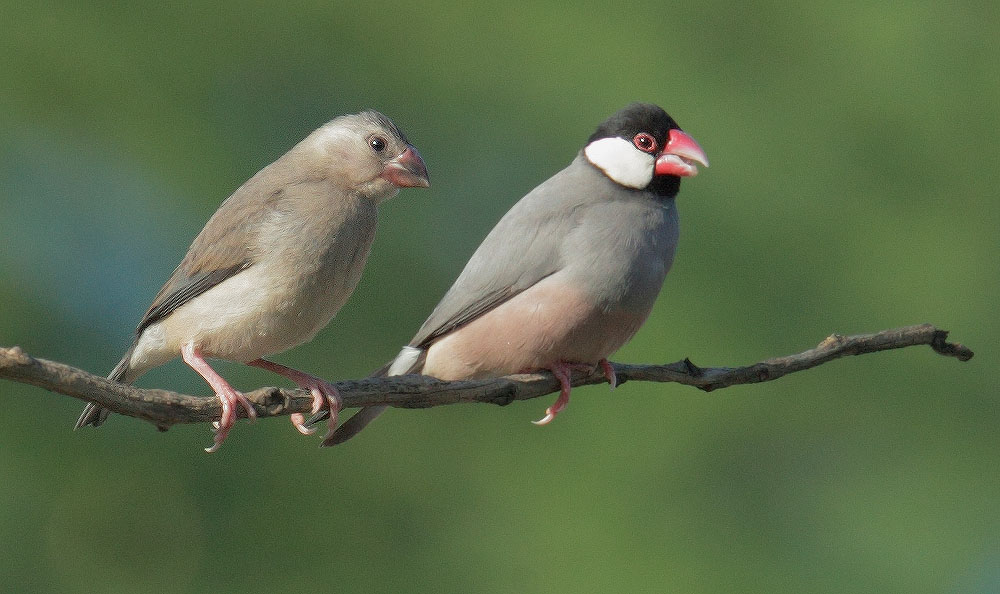
I have met many bird keepers who assume the Java Sparrow is simply another colorful finch that happens to have a bigger beak and a slightly heavier build. I made that mistake myself until I spent more time studying these birds, keeping them, and comparing their behavior to the finches I already knew well. The more I observed them, the clearer the differences became, and that raised the question that many beginners ask sooner or later: is the Java Sparrow truly a finch, or do we simply group it with finches because of size and convenience? Sorting out this question helped me understand the species much better, and it also gave me a clearer sense of how to care for them in a way that respects their unique needs.
As I explored their history and biology, I realized that the Java Sparrow stands apart from the typical finch family. The more time I spent with them, the more obvious it became that they behave differently, communicate differently, and even require a different approach in captivity. That contrast pushed me to rethink how I house them, what I feed them, and how I interact with them. Owning them has been a lesson in the importance of not assuming that similar size or similar diet means similar species.
Where the Java Sparrow Actually Belongs
One of the first things I had to clarify for myself was the Java Sparrow’s true classification. It is easy to assume they are finches because they are commonly sold alongside finches, and many pet shops do not bother explaining the difference. The Java Sparrow belongs to the Estrildidae family just like zebra finches, society finches, Gouldians, and many others. However, they fall into a different group within that family, the Lonchura group, which includes munias and mannikins. These birds have a thicker beak, a heavier body, and behaviors that often feel more aligned with small grain-eating passerines that live in tighter social flocks.
Even though they share a family with finches, the Java Sparrow’s size and presence set them apart. Most finches weigh around 10 to 20 grams, whereas Java Sparrows can reach around 25 grams or more. That weight difference may not look like much on paper, but in the cage, it creates a very noticeable power dynamic. I learned quickly that they carry themselves differently, almost like tiny starlings, and understanding that helped me avoid housing them with smaller species that might become stressed or pushed around.
Their classification also affects how we interpret their behavior. Many finches focus on short bursts of energy, quick hops, and light fluttering. Java Sparrows tend to perch with more firmness, move with more intention, and interact with a confidence that exceeds their size. Seeing these distinctions up close made me appreciate that their place in the finch world is a bit more complicated than most people assume.
How Their Natural Habitat Influences Their Behavior
Before keeping Java Sparrows, I underestimated the influence of their wild habitat on the way they act in captivity. They are originally from the islands of Java and Bali, where they live in open grasslands, fields, and agricultural farmland. These environments are full of dense seed sources, stable temperatures, and plenty of open flight space. As a result, Java Sparrows developed strong flight patterns and a flock-oriented lifestyle that is slightly different from the way smaller finches organize themselves.
In captivity, I noticed that they feel most confident when they have plenty of room to stretch their wings. A small cage may be enough for a pair of finches, but for Java Sparrows, it limits their natural movement and leads to pent-up energy. Once I switched them to a larger aviary-style enclosure, their confidence skyrocketed. They became more social, more vocal, and more curious. It showed me how deeply their wild roots shape their day-to-day needs.
Their habitat also shaped their diet. In the wild, they feed heavily on rice and other grains, which explains their nickname, ricebirds. I found that they thrive best on a seed mix that is richer, more substantial, and more varied than what I typically give small finches. Adding whole grains, sprouted seeds, and fresh greens brought out the best in them. Their plumage brightened, their energy levels improved, and their breeding behavior became more predictable.
How Java Sparrows Differ From Typical Pet Finches
I initially expected that keeping Java Sparrows would feel similar to keeping zebra finches or society finches, but the differences became obvious within the first few weeks. They carry themselves with more assertiveness, and their social rules are a little stricter. They do not constantly chirp like zebra finches, but they have a deeper, more deliberate set of calls that they use to communicate with one another. These vocal differences alone make the environment feel distinct.
Java Sparrows also form stronger pair bonds. While many finches pair and breed readily, Java Sparrows take their time. I had to give them the space to choose their own partners, communicate through body language, and develop a bond before attempting breeding. Once the bond forms, though, it becomes incredibly stable, and they raise their chicks with a calm cooperation that is impressive to watch.
Another major difference is their need for stability. They react more noticeably to sudden changes in environment, new birds entering the cage, or loud disruptions. Smaller finches seem to bounce back quickly, but Java Sparrows like routine, and they show stress more clearly when that routine is disrupted. Offering predictability, quiet nesting spaces, and stable perches makes a big difference in how comfortable they feel.
Housing Requirements That Actually Suit Them
I had to rethink their housing completely after watching how they used the space. A standard finch cage feels tight for Java Sparrows. They prefer a long, wide flight path rather than tall vertical structures. A long enclosure lets them fly back and forth in a natural pattern, and this reduces stress significantly. I also realized that heavier birds need sturdier perches, because the tiny dowels made for small finches do not feel stable for them.
Group size also matters. Java Sparrows thrive in small flocks, usually four or more. A single pair can feel nervous or overly dependent on human presence. When I increased my flock size, I noticed that they became more relaxed. Their interactions became more balanced, and their vocalizations took on a comforting rhythm that made the room feel lively but not chaotic.
Spacing is another factor new keepers often overlook. Java Sparrows can be territorial during breeding season. They need room to claim a space without constantly bumping into other birds. Nest boxes should be placed far apart, and there should be enough perches to allow birds to avoid each other when needed. This reduces conflicts and encourages smoother flock dynamics.
Diet Considerations That Keep Them Healthy
Their diet was one of the first things I adjusted after discovering how different Java Sparrows are from smaller finches. They benefit from a seed mix that mimics their natural grain-heavy diet. Millet alone does not satisfy them, and it can lead to nutritional gaps if overused. Once I introduced canary seed, oats, rice grains, and sprouted mixes, their energy levels and feather quality improved noticeably.
Fresh vegetables and greens are also essential. They are not picky eaters, and they enjoy leafy greens like spinach, kale, and lettuce. Offering chopped carrot, broccoli, or herbs gives them variety and boosts their overall health. I also learned that they appreciate calcium-rich foods, especially during breeding season. Cuttlebone, mineral blocks, and occasional egg food help support strong eggshells and chick development.
Water hygiene matters more than I expected. Java Sparrows drink frequently, and they often dip their beaks in water after eating. This means their water cups get dirty faster than those of small finches. Changing water twice a day prevents bacteria buildup and keeps them in better condition.
Their Personality and How It Shapes How I Care for Them
Java Sparrows have a presence that feels different from other finches, and that personality influences how I care for them. They are confident, observant, and surprisingly interactive. They pay attention when I enter the room, and they often perch together to watch what I’m doing. They are not cuddly birds, but they have a calm social awareness that makes them enjoyable companions.
Their confidence also means they need clear boundaries. If the cage is too small, too crowded, or too cluttered, they become unsettled. If the environment is well organized, they settle into a peaceful routine. The way they interact with each other is also more structured. They establish a social hierarchy gently but firmly, and once that hierarchy is set, the flock becomes stable and predictable.
They are also expressive birds. Their singing may not be as constant as zebra finches, but it is deeper and more melodic. When the flock communicates during feeding time or evening rest, the sound feels intentional and surprisingly soothing.
Breeding Considerations That Set Them Apart
Breeding Java Sparrows requires patience, because they do not rush into raising chicks the way some finches do. I learned that the best approach is to allow bonded pairs plenty of time to settle before offering nests. Once they decide they are ready, they become dedicated and methodical parents.
Their nests tend to be neat and substantial. They appreciate sturdy nesting materials rather than only soft fibers. Coconut fiber, dry grass, and palm strips work well. Their eggs are slightly larger than typical finch eggs, and the incubation period is steady. Both parents share the duty of warming the eggs, and once the chicks hatch, the feeding routine becomes rhythmic and predictable.
I found that young Java Sparrows take longer to mature compared to smaller finches. They feather out beautifully, but they also depend on their parents for guidance even after leaving the nest. Giving them time with the flock helps them develop confidence and proper social patterns.
Final Thoughts
After spending so much time caring for Java Sparrows, I no longer try to fit them into a simple category. Technically, they are part of the same family as many finches, but their behavior, body structure, and social patterns make them feel like a distinct type of companion bird. They have their own rhythm, their own requirements, and their own charm.
Calling them a finch is not entirely wrong, but it does not capture the full picture. To me, they sit in a comfortable middle ground between true finches and small grain-eating passerines with a stronger presence and personality. By appreciating them for what they are, I have been able to meet their needs more accurately and enjoy their company in a deeper way.
If anything, caring for Java Sparrows taught me the importance of observing each species closely rather than assuming that all small birds follow the same rules. They are unique, confident, beautiful birds, and once you understand what makes them stand out, keeping them becomes a rewarding experience that brings a different kind of energy into the aviary.