
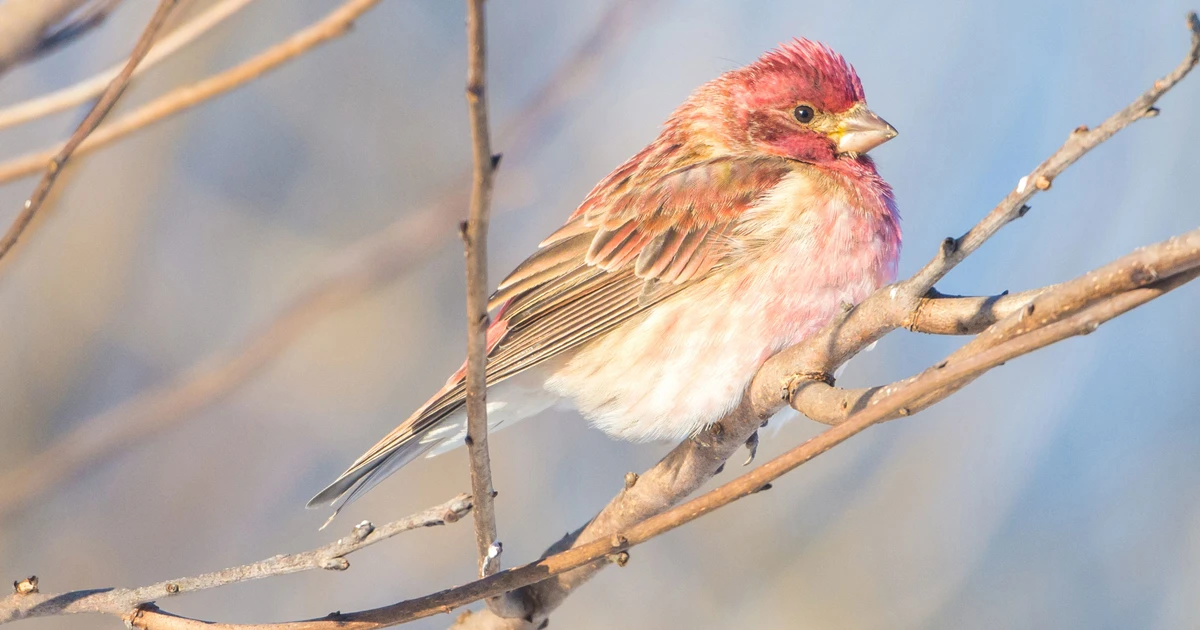
Finches capture attention easily with their colors, songs, and energetic personalities, yet most people only recognize a handful of the more common species. The familiar house finch, purple finch, and zebra finch appear so often in birding guides that the rest seem to slip quietly into the background. As I spent more time observing finches and reading about their behavior, I realized how many fascinating species rarely appear in conversations despite having remarkable traits. Some come from remote forests, others from dry grasslands, and a few thrive in mountainous regions where few people ever get to see them. Exploring these lesser-known finches opened up a new appreciation for their diversity, and this guide highlights the species that stood out most to me.
Andean Siskin
The Andean siskin caught my attention because of its range high in the cloud forests of South America. It has a greenish-yellow appearance with darker wings, giving it a subtle but striking look. What makes this bird interesting to me is the way it adapts to elevations that many species avoid. These siskins move through moss-covered branches, often traveling in small groups that blend into the dense vegetation. Observing them requires patience because they shift quickly between shadows and filtered light.
Their movements feel more coordinated compared to some other finches. I’ve seen reports of them feeding on a variety of seeds and sometimes on tiny insects hidden inside flowers. The mix of diet choices allows them to thrive in environments where food sources change frequently depending on rainfall and altitude. Even though they’re not flashy in the same way as tropical tanagers, their calm nature and resilience make them one of the most intriguing finches I’ve come across in my research.
European Serin
The European serin often gets overlooked despite being widespread across parts of Europe and North Africa. Its small size and yellow mottled pattern give it a delicate appearance. I’ve always been drawn to how lively these birds sound. Their song carries a rapid, almost tinkling quality, making them easy to recognize if I stop and listen for a few minutes near open woodland edges or orchards.
Another feature that stands out is how well they adapt to urban environments. I’ve seen many accounts of them nesting near gardens, parks, and cultivated fields, which makes them accessible to birdwatchers who live in cities. Their small, conical bill helps them crack open seeds, especially those from weeds and grasses that thrive in disturbed soils. The European serin may appear common in some regions, but the rest of the world rarely hears about it even though it offers plenty of charm.
Black-Throated Finch
The black-throated finch, native to Australia, earned a place on my list because of its distinct markings and conservation challenges. It has a pale body with soft shades of gray and buff, paired with a solid black throat patch that gives it an unmistakable look. This species tends to inhabit grassy woodlands and open savannas where the climate swings between wet and dry seasons.
What makes the black-throated finch particularly significant to me is its declining population. Habitat loss from land clearing threatens its distribution, especially in Queensland. This species remains fairly calm in demeanor, often feeding in small flocks on grass seeds. Its subtle beauty and vulnerable status highlight how important it is to pay attention to lesser-known finches, not just the ones dominating field guides. The more people become aware of these birds, the better chance they have of receiving protection.
Twite
The twite is a hardy finch from Northern Europe that drew me in with its understated looks and rugged lifestyle. It has a brown-streaked body, a small yellowish bill, and during breeding season, a pinkish rump that becomes more visible when it takes flight. Even though the twite doesn’t glow with bright colors, it carries a charm rooted in its endurance.
This bird often inhabits moorlands, coastal fields, and areas with low vegetation. I picture them hopping through wind-swept grasslands where food sources can be unpredictable. They feed primarily on seeds from weeds and coastal plants, making them specialists in surviving harsh conditions. As winter approaches, twites sometimes form flocks that travel considerable distances to reach milder areas. Watching how they adapt through the seasons reveals just how versatile finches can be even without vivid plumage.
Yellow Canary
The yellow canary from southern Africa carries a cheerful appearance thanks to its bright yellow feathers. I found it fascinating because it balances between wild environments and regions influenced by human activity. You can see them near open fields, farms, and gardens where grasses provide both seed and protective cover.
Their social nature stands out. These canaries often form small groups that fly closely together, chirping persistently as they travel. Their song feels light and melodic, giving them a pleasant presence wherever they appear. Even though the yellow canary is related to domestic canaries, it maintains its own strong identity in the wild through its behaviors and habitat choices. Learning about them reminded me of how varied canary species can be outside of the birds people keep as pets.
Crimson Finch
The crimson finch is a striking species with deep red plumage that immediately caught my imagination. Found in northern Australia and New Guinea, it prefers wetlands, reed beds, and areas close to tall grasses. This environment allows groups to move together while staying partially hidden. They feed on grass seeds, small invertebrates, and sometimes grains from agricultural fields.
What makes this finch compelling to me is how bold it appears compared to other lesser-known species. Its vibrant red feathers and black markings give it a dramatic contrast that stands out beautifully in natural light. Their social interactions add even more interest. I’ve seen accounts of males displaying their brighter colors during breeding season while engaging in short flights and vocal exchanges. This species feels full of personality, and yet it rarely appears in common finch discussions.
Streaky Seedeater
The streaky seedeater lives across eastern Africa in highland regions and open shrublands. It has brown streaks along the body that help it blend easily into its surroundings. Despite its mild appearance, it has adapted impressively well to living near human settlements. These birds often gather near gardens and farms where seed-bearing plants grow in abundance.
I find their feeding style interesting because they spend a significant amount of time manipulating seeds with precision. Their strong bill allows them to crack tough seed shells that other finches might avoid. Another detail that caught my interest is how vocal they can be during early morning hours. Their soft whistles add a pleasant soundtrack to highland regions where cool air carries sound easily. It’s a species that blends into rural life while maintaining a quiet importance within local ecosystems.
Dark-Breasted Rosefinch
The dark-breasted rosefinch inhabits mountain ranges across Asia, especially the Himalayas. I imagine the difficulty of living in such high altitudes, and that alone makes this species impressive. It has a combination of rose-red plumage on the head and breast with darker tones along the wings and tail. These contrasting colors give it a bold appearance that stands out against rocky terrain.
Their behavior reflects the unpredictability of mountain climates. They move quickly between shrubs and low vegetation, often staying alert for predators. Their diet consists of seeds, flower buds, and small insects, which helps them survive in regions where food availability changes dramatically with the seasons. The more I read about this species, the more I appreciate its ability to thrive in challenging landscapes.
Golden-Browed Chlorophonia
The golden-browed chlorophonia is one of the most colorful finches I’ve come across. Its green body, yellow brow line, and turquoise wings create a brilliant palette that looks almost surreal in photographs. Native to Central America, this species usually inhabits humid forests, especially in mountainous regions. The vibrant colors serve as camouflage among leaves and mossy branches.
What stands out is their feeding pattern. They consume a mix of fruit, seeds, and small insects, hopping swiftly between branches as they search for food. Their movements are quick but graceful, often occurring in pairs. I find it fascinating how such a stunning bird remains lesser known outside birdwatching communities focused on tropical species. Their beauty deserves far more attention than it gets.
Tibetan Serin
The Tibetan serin lives in high-altitude forests across China, India, and Nepal. Its subtle yellow and olive colors blend perfectly with the coniferous trees it prefers. This finch fascinates me because of its seasonal movements. These birds shift elevations depending on weather patterns, sometimes traveling long distances to access seed-rich areas.
Their flocks create an interesting dynamic. They communicate through soft, high-pitched calls that echo lightly in mountain air. The Tibetan serin has a quiet grace that matches its environment, and yet it receives little recognition beyond specialized field guides. Learning about it reminded me of how many finches have evolved specifically for narrow ecological niches that most people never see.
White-Winged Crossbill
The white-winged crossbill belongs to the crossbill family, known for their uniquely shaped bills that cross at the tip. This adaptation allows them to pry open conifer cones with remarkable efficiency. I’ve always been fascinated by how specialized this ability is. These birds live in northern forests across North America and Eurasia where conifer seeds make up the bulk of their diet.
Their roaming behavior makes them unpredictable. Instead of following fixed migration routes, they travel widely in search of cone-heavy trees. Some years they appear in large numbers, while in others they remain scarce. Their crossed bills look unusual at first glance, but once I understood how they feed, it made perfect sense. Their lifestyle shows how finches can evolve in remarkable ways when an environment demands it.
Scaly-Breasted Munia
The scaly-breasted munia is not always classified strictly under finches, yet it behaves and feeds much like one. It remains popular in parts of Asia, Africa, and the Pacific islands, usually inhabiting grasslands and farmlands. The pattern on its chest resembles overlapping scales, giving it a delicate and appealing design.
What stood out to me is how widespread this species has become. It adapts readily to human-altered landscapes and forms flocks that can number in the dozens. Their constant chatter fills the air around rice fields and grassy areas where seeds grow abundantly. Their calm and predictable nature makes them easy to observe, making them ideal for birders looking to explore species beyond the more famous finches.
Why These Species Matter
Discovering lesser-known finches deepened my appreciation for how varied this family of birds truly is. Each species adapts to its surroundings through unique behaviors, diets, and physical traits. Some thrive in extreme altitudes, others in wetlands or dry grasslands. Their diversity reflects how dynamic ecosystems can be, and understanding these birds helps highlight the importance of conservation.
The challenges many of these finches face became more apparent as I learned about them. Habitat loss, climate change, and limited ranges threaten several species on this list. By paying attention to them, I feel more aware of the small but significant roles they play in their environments. Even the quietest finch contributes to seed dispersal, insect control, and ecological balance.
Conclusion
Exploring lesser-known finch species broadened my appreciation for how remarkable the finch family really is. Each bird, from the high-altitude dark-breasted rosefinch to the vibrant golden-browed chlorophonia, reveals a different facet of adaptation and survival. These species may not appear often in mainstream birding circles, but they deserve attention for their beauty, resilience, and ecological value. The more I learn about them, the more inspired I feel to continue noticing the details that make the natural world so rich and varied.